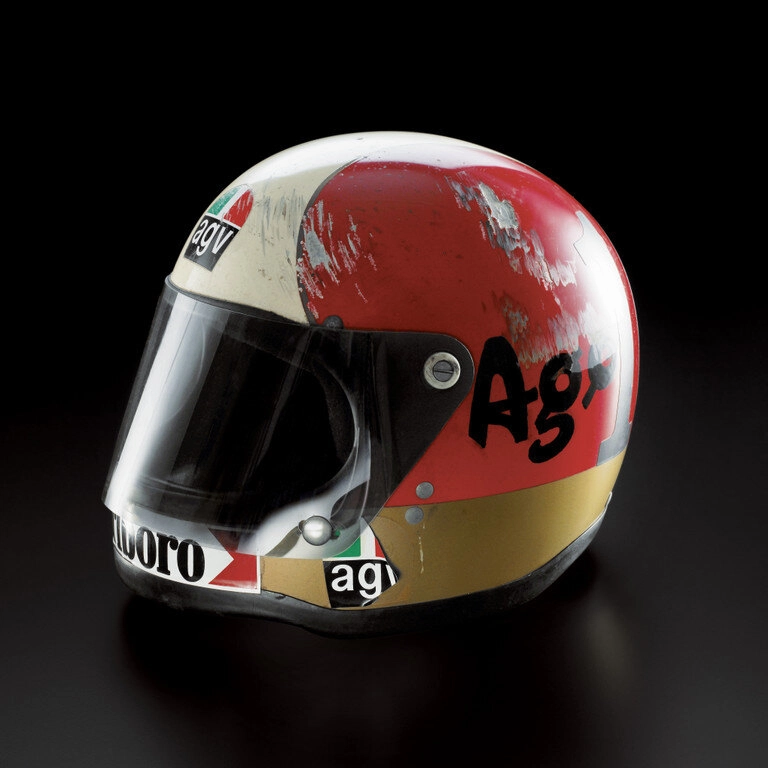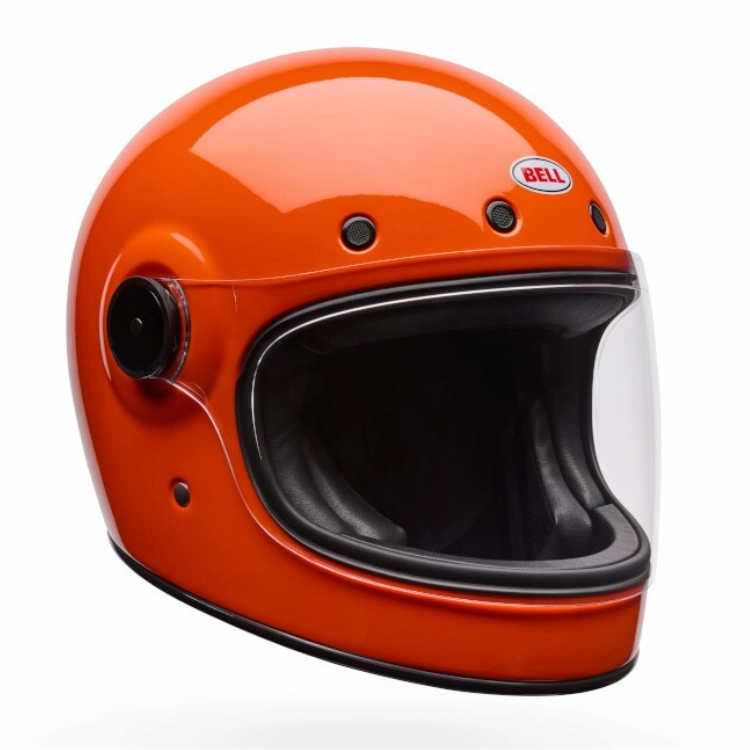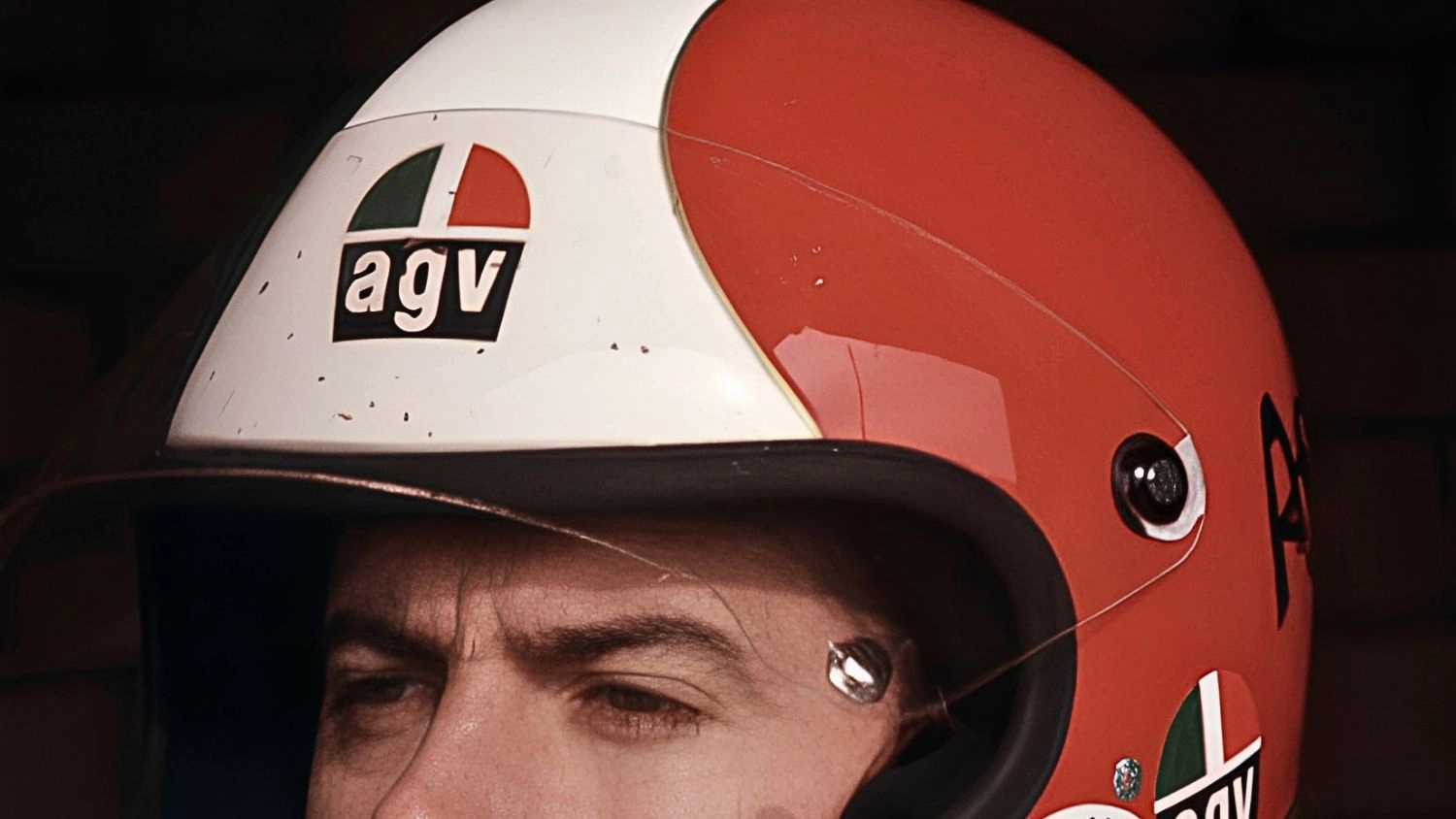
Full-face motorcycle helmets were not that common in the 1960’s, not even in Motorcycle Grand Prix racing. Giacomo ‘Ago’ Agostini helped change that. His contribution to the refinement of AGV’s X3000 crash helmet is evident in the final shape of the helmet.
The brand launched the helmet in the late sixties, and with Ago’s help, it became the lid seen in these images. It was the first full-face helmet made by a European manufacturer and a novelty on the Grand Prix circuit. Open-face and pudding basin helmets were still the choice for most racers.
Tap this to see Renchlist more often in your Google Search results and AI Overviews
Here’s a look at how a fifteen-time World Champion and scrappy startup gear manufacturer helped make full-face protection the norm for riders the world over.
How Giacomo Agostini Shaped the AGV X3000
In the early sixties, motorcycle racing was still exceptionally dangerous. Racetracks were lined with metal barriers and flammable hay bales, telephone poles, stone walls, railway tracks and more. The ways in which a rider could meet his fate were plenty, if he got it wrong.
Rider deaths were commonplace, but some felt they were preventable, and a growing number of riders were beginning to voice concerns. Car racing was going through something similar, with a few drivers pushing for better safety.
In motorcycle Grand Prix racing, Giacomo Agostini was one of those voices. He was a factory rider for MV Agusta; he was already a world champion, and he was already winning.
There was a pushback from some race organisers, who tried to paint riders asking for greater safety as cowards, when the opposite was true. It took courage to speak out. But they couldn’t do that with Agostini. He was the fastest man on the circuit, pushing the hardest. So people started paying attention.
Agostini AGV X3000
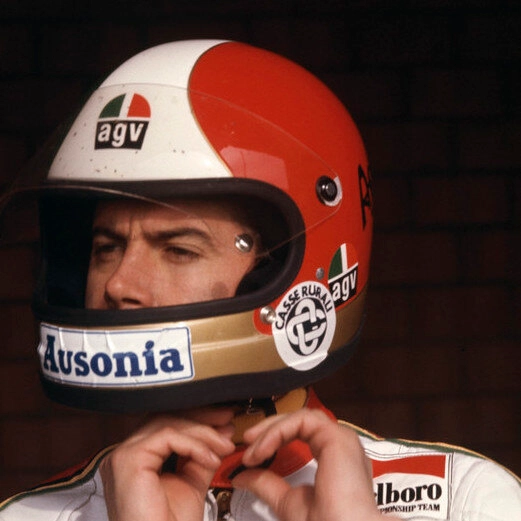
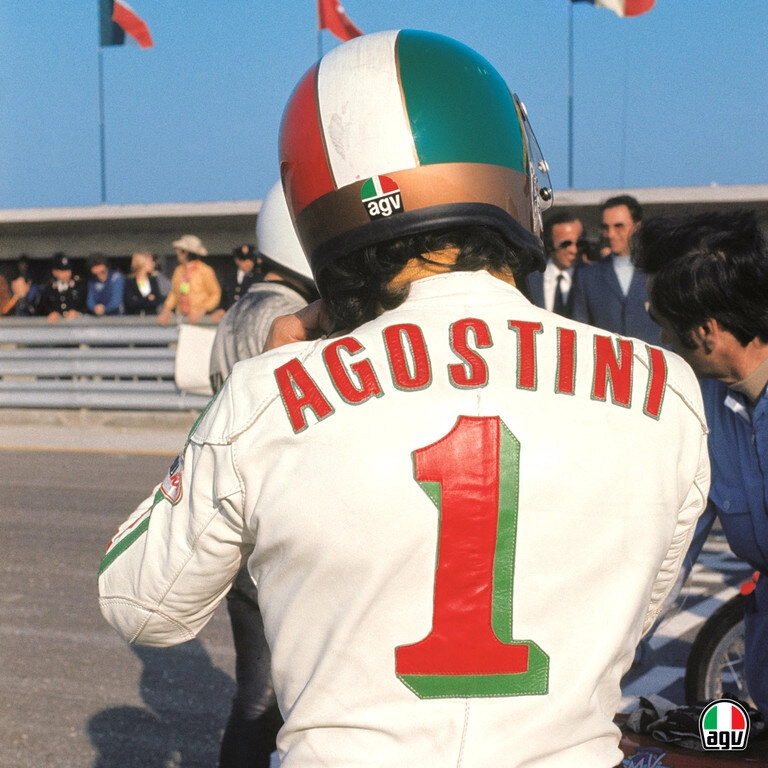
The association between Agostini and AGV is well-known. Gino Amisano, founder of AGV, first worked with Ago in 1967, the year he won his second 500cc Grand Prix World Championship after winning it the previous year. He was racing in a pudding basin helmet painted in the tricolore, the Italian colours.
AGV launched its first full-face helmet shortly after the Bell Star was launched. Agostini is cited as being the first rider to wear a full-face helmet in an official FIM-sanctioned race. Although some accounts say Alberto Pagani was the first. He wore one at the Nations GP at Imola in September 1969.
Visibility
Regardless of who was first, Agostini continued his work with AGV through the early seventies. The X3000 helmet was good but not good enough. He wanted tweaks. One of his main concerns was visibility. He couldn’t see as much through the full-face as he could in his open-face. So he went back to AGV, and they tweaked the design to widen the viewport.
Comfort
Another problem was his riding position. Agostini liked to lie flat on the tank, practically prone, with his chin resting on it. He couldn’t do that in a completely round helmet. AGV came up with a solution: a cutaway at the front, so he could bend over the tank and rest his chin while still seeing the track clearly. A recess at the back stopped the edge of the shell pressing on his neck when he was fully tucked in.

Withdrawal of the Isle of Man
Agostini was also a fierce critic of circuit safety, in particular at the Isle of Man TT. In 1972 his close friend Gilberto Parlotti died there, and Agostini announced he would never race at the TT again. He didn’t have an issue with the event itself; he’d already won 10 races on the course. His objection was to riders being contractually required to enter such a dangerous race as part of a World Championship campaign.
A Champion’s Words Carries Weight
As the reigning champion, his word carried weight. Top Grand Prix riders walked out too, and MV Agusta stayed away from the Island. By 1977, the TT was dropped from the World Championship.
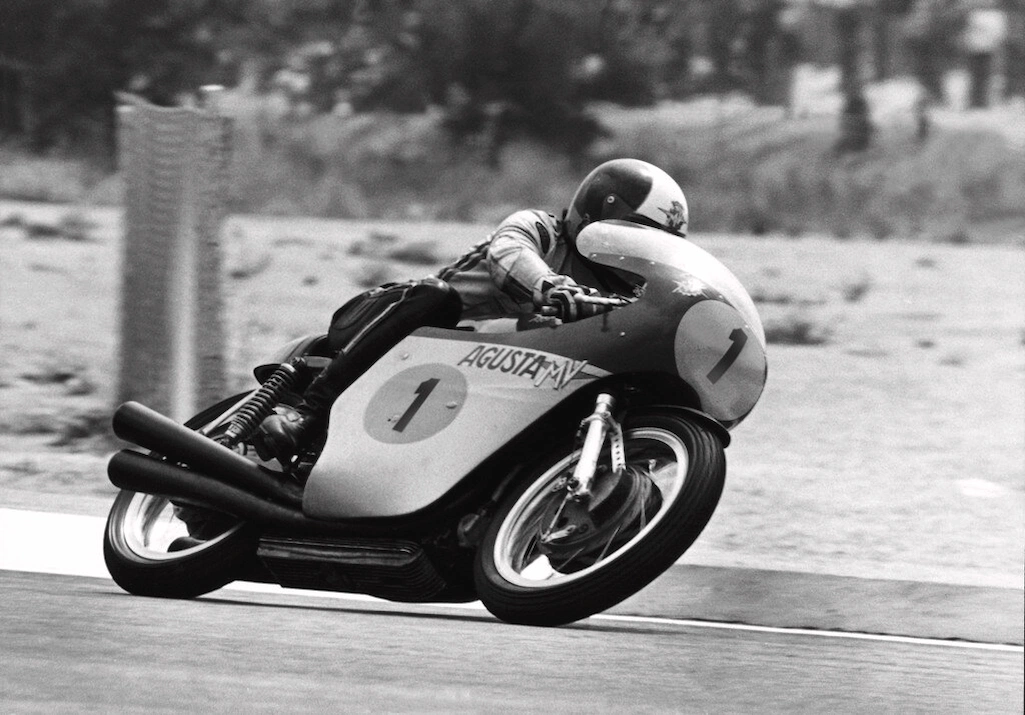
Wearing the X3000, Agostini kept winning. From 1968 to 1970, he won every single race he entered in the 350cc and 500cc classes, and he took the 500cc title seven years in a row, from 1966 to 1972. He went on to be a 15-time world champion counting both classes. As the fastest man on the track was donning a full-face helmet, its acceptance was almost assured, although not guaranteed. Other riders began to swap their old buckets and open-face helmets for one too.
Ago had his eye on race suits too, which at the time were no better. They were thin and did little to stop abrasion on the track. Together with Lino Dainese, a young maker of racing leathers, he helped develop better on-track leathers. (AGV joined the Dainese group in 2007.)
Legacy
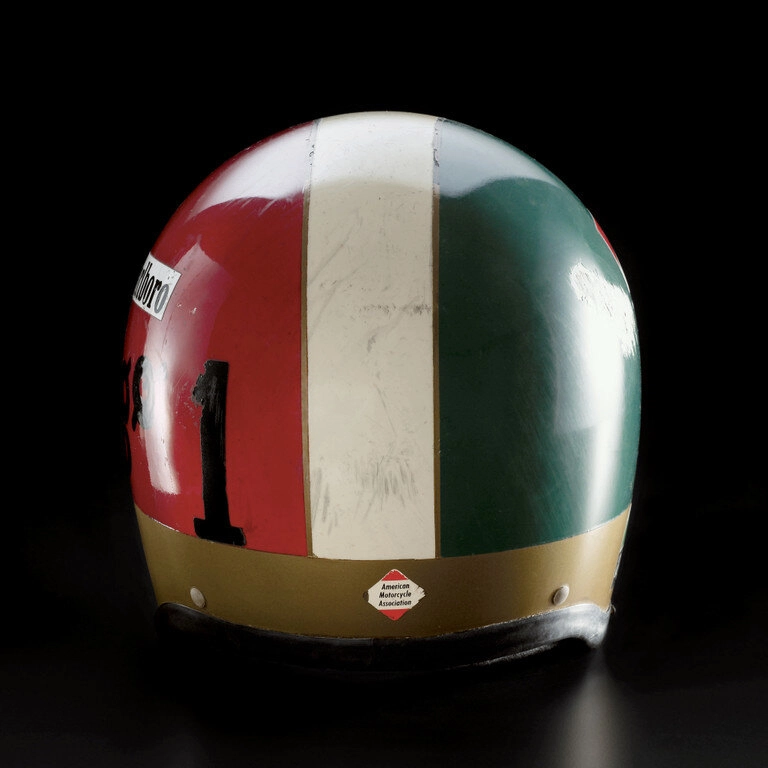
Perhaps, if Ago hadn’t been so dominant on the track, his safety concerns might have delayed the widespread adoption and the recognition of the necessity of full-face protection.
Decades later, AGV designed a faithful recreation of the X3000 helmet, bringing it up to modern safety standards, certified to ECE 22.05. However, since the more rigorous ECE 22.06 rolled out, there hasn’t been an update. That’s a shame because if it’s anything like its predecessor, it would certainly deserve a place on our Best Retro Helmets list.